In the headlines
Broadcast segments, national features, and print articles - from a rocketry club in Gaborone to NBC, Fox, iHeart, and a national U.S. weekly.
Watch the coverage

Read the transcript
Is the sky really the limit? What's behind the trillions of galaxies in our universe? For one Indianapolis engineer, those questions are fueling the imagination of young minds. Tonight, Alex Almanza shows us how he's helping kids prepare for liftoff and reach beyond the skies. When night falls in downtown Indianapolis. A scientist is at work in his apartment, the lab. My name is Tanaka Choa, but no weird science here, no monsters, no mad experiments, and I am super enthusiastic about rockets in space, as you can see, just lots and lots and lots of rockets. Sometimes it gets jammed. For Tanaka, there's barely any room to walk in his home, but he says it's all in the name of science. My initial intent for this space was to actually have furniture. Tanaka's obsession didn't start here. It began in high school in the African country of Botswana, where he proposed a rocket club. Some people laughed at me because they thought it was like a ridiculous, outlandish idea, and it was kind of because, you know, back there the infrastructure for it wasn't really there. But things started to look up after he won an essay competition, beating the entire African continent. He later found himself in French Guiana watching an Ariane 5 launch. Yeah, I got to take the mass now. Tanaka is paving the way for the next generation by helping start a free rocket boot camp for kids in Marion County. He pitched the idea to the Minority Engineering Program of Indianapolis, and they backed it with grant funding. This brings them closer to that dream if they've had it as a kid like I had it as a kid. And this scientist's crew of aspiring engineers, they've got a mission: 1000 rockets launched from Indy by the end of the year. It's to make Indy have the most rockets per capita in the world. I am at around 80 right now. It's a mission that helps kids get involved in STEM related fields, fueling a passion much like the one that sparked Tanaka's. Space is the limit, really, and there is no limit in space. It just keeps going. And here the countdown has already begun. Liftoff. We have a liftoff in Indianapolis and in space. Alex Almanza, 13 News. So if you've got a future astronaut at your house, the program is free for families across our state. We've got more information on how you can sign up tonight on WTHR.com.
Read the transcript
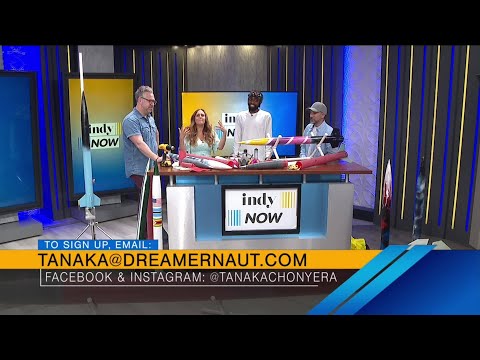
Welcome back to Indy Now, friends. This is so cool: Hoosiers, you can take part in a free high powered rocket boot camp coming up in early August. Joining us to share more, the camp's founder Tanaka, as well as our good friend Rick Snyder with the Fishers Maker Playground. Good to see you guys. How are you? And look at all these cool rockets. Tell us a little bit more about the camp and what's going on.
I created this camp with the hope to inspire kids. I think it's such a great year for space right now, and my goal is that it really starts here, with high power rocketry, to get them inspired. My hope is that one day a future mission commander or mission specialist goes into space on an Artemis mission. They get to build and make their own high power rocket, and I keep the ratio one to one. It's really important for me that they all get this experience. They build, they paint their own, they launch their own. These use the same family of fuels as a Space Shuttle, the solid boosters on Artemis, ammonium perchlorate composite propellant, and that really gets them fired up. Depending on the motor it uses different power levels. These can go to 2,000, 5,000 feet.
Oh my goodness, wow. OK, so this is happening at the Fishers Maker Playground. Nick, you've been on the show for segments before. Tell us what inspired you to start this partnership.
Tanaka's been doing this for about a year and a half, and we heard about it through the community. The first thing I thought was like the little rocket kits, and then I went and saw his social media and what they're doing, and I was like, this is amazing, how can we do this? We got in touch and he was like, heck yeah, we can do it at the Maker Playground. He's super easy to work with and we're really excited to get this off the ground. August second is going to be the first workshop. You can do registration through Tanaka's website, go through his social media and find it there. His socials are right there on the screen.
Tanaka, I know you have a really cool history with where you grew up and how you got into this.
Yeah, for sure. So I was born in Zimbabwe and then my family moved to Botswana when I was about 4 or 5 years old, and that's really where my passion started. It was for a STEM competition. I wanted to make my own rocket in high school and the resources weren't really there, so I built everything from scratch. I was met with a lot of pushback, but it took some convincing and they opened the doors to the chemistry labs. I had the time of my life. We won the STEM competition, and then there was another competition, an essay competition, and that was really cool because they flew me out to Paris, and then I got to go watch the Ariane 5 launch in French Guiana in South America. I was in the Vehicle Assembly Building. It was so cool, I was like 20 feet away from the actual thing.
This is one of the things we love about this show. I guarantee there's people out there like, oh my gosh, my grandkids would love this. How can they participate? You said it's on August 2nd.
Go to his website or through Tanaka's website, he's got the registration for the free workshop there. Follow Maker Playground on Instagram and Facebook, you'll see us posting links. Follow him, register there.
Very cool. Good luck Nick, thank you guys so much, best of luck with the launch.
It'll happen early August, go check it out. All the information is on your screen, and I did want to mention it's completely free. This is a very expensive hobby, there's a lot of cost and logistics complexity, and my goal for this is just to eliminate that barrier to entry. The launch site is out in Muncie. Everything's free, lunch provided for the all day event.
Thank you for mentioning.
Read the transcript
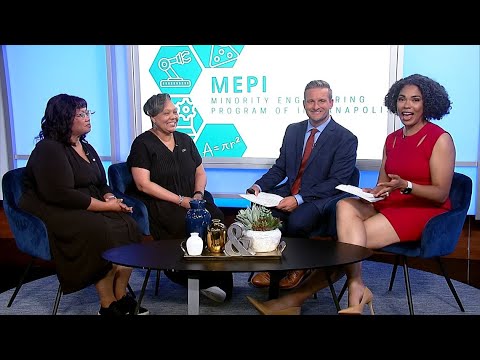
So we've all heard how important STEM learning is for students: science, technology, engineering, and math. So many careers demand those skills today, and a local program is working to make sure no students are left behind when it comes to these concepts and learning about them. The program is called MEP. It stands for Minority Engineering Program of Indianapolis, and two reps from the program are joining us now to talk about their mission and a special event tomorrow. So Holly and Marilyn, hi, thank you for being here. How are you all helping get more kids interested in STEM?
Thank you so much. So the Minority Engineering Program of Indianapolis, that we fondly call MEP, we use mentors that are engineers throughout Indianapolis to serve, and the overall goal of the program is to increase knowledge about STEM by exposing students 6th through 12th grade through a Saturday program. And we want a lot of participants. We average about 25 students per grade level, and Marilyn was one of those students, a proud success story.
So there's an event tomorrow supporting the work that you all do. More than $60,000 in scholarships will be awarded, right? Tell us about that.
Yes, lots of the organizations that support MEP provide financial support, and we are able to provide scholarships for all of the seniors that are in the program this year as they're moving on to pursue their careers in college.
Like true engineers they are of course able to quantify their data and the success that's happening here, but it was so impressive we wanted to share it. You've helped almost 6,000 students over the past 40 years learn about STEM careers. In the past 6 years they've had 100% of their students go to college, and 80% of those students declared STEM majors. Incredible. What's the key to success here? What are you all doing differently that you feel like maybe our school systems could adopt, or parents need to pay attention to?
The biggest thing is mentorship. All of the individuals involved in the leadership as well as in the facilitation of the programs are volunteers with STEM backgrounds, and so the students are able to see people who are volunteering with them, but their day job is in some kind of engineering capacity, or has been. And so the conversations, from industrial engineering to chemical to mechanical, we're able to show them not just theory but how they might actually apply it, and share with them what we're doing, and it sparks a lot of interest. We also do field trips to a lot of different places across the city, and I think that has a big impact, because when kids can see something, they use their visual senses and they can really identify with it.
Well, we're out of time, but I do want to ask really quickly: if parents who are watching this afternoon want to get their kids involved, how can they do that?
They go to mepai.org and they can get additional information.
All right, and we'll link that to our website, WTHR.com. Thank you ladies so much for joining us, and congratulations on your success.

Read the transcript
Like 60% of Africa is under 25, and the median age in Africa is 18. So if there's anyone that's going to make a difference, it has to be the youth, and I want to be a big part of that. Everyone always looks to the Western world as the frontier of cutting edge technology. I want it to be in Africa.
Another passion of mine is renewable energy, so my friend Wayne and I at school have designed and made a prototype for a parabolic mirror to produce electricity. It focuses sunlight onto a focal plane, and that either heats up a fluid or water. Heating the fluid can then be used to generate steam for electricity; heating the water can then be used to provide hot water. Typically this one uses a reflective surface. A normal solar panel basically knocks electrons off of silicon and that produces a potential difference, but this one is focusing the sunlight.
Wow. I have a strong feeling that this young man, his brain and how he thinks, it's coming from the mother. Let me just hear: mom, what do you do, and how did you impact this man?
Well, I'm a realtor, I'm a real estate agent.
Okay, so he's selling property!
Yes, but I've always been there for him to support his wild dreams. And he's always aimed high, he's always wanted to be an achiever. He's always told me, "Mommy, I'll do something great, something that the world will know me for." So I think the dream is closer to being realized, with God's blessings of course.

Read the transcript
Hey everyone, it's my last day here in South America. This has been the trip of a lifetime. The rocket launched yesterday and it was amazing. I wish everyone could get the chance to see a live rocket launch, because it is hands down the greatest thing I have ever seen. You see the rocket first, it lights up and it's like staring directly into the sun, and then you hear all the vibrations and the motors running. It's just been amazing. I'm really sad to be leaving, but I'm never going to forget this place. And once again I'd like to thank MultiChoice and Eutelsat for this life-changing experience.

Skip to 1:15 for the announcement. This is the moment astronaut Paolo Nespoli called me "the next Nobel Prize winner".
Read the transcript
Presenter: For the essay winner, I would like to call Dr. Angela Lamte for taking the envelope. Thank you. And the winner is...
Astronaut Paolo Nespoli: Thank you very much. OK, so the essay indicates a deep pre-existing passion and commitment for space science and technology. It is clear that he has cultivated his passion with research and study that have resulted in sound knowledge and understanding of the subject matter. Furthermore, he transformed his passion and knowledge into practical application. Within the essay, the contestant outlines the benefits of each proposal and possible ways to implement them. The contestant proposes several forward-looking, disruptive and intriguing ideas not yet commonly explored or embraced. And the winner is: Tanaka Chonyera, from Botswana!
Astronaut Paolo Nespoli: We had a good discussion about him. We had to call him, because we were not quite sure if he's crazy or the next Nobel Prize winner or something like that. And we actually put our money on the second one, so that's good.

Read the transcript
MultiChoice representative: Before joining MultiChoice, I went around the continent, about five African countries. My performance was in the sciences. Did I study science in school? Yes. Did I do it in university? No, I did business studies, but then I thought I'll go to the scientists and teach them how to do it. In ICT I worked for brands like Microsoft and Verizon.
So today it is really an honor and a privilege to be addressing you, and it is for a very, very good cause. As you know, your very own Tanaka did this amazing thing by winning the 2019 DStv Eutelsat Star Awards competition, and here we are to hand over him a prize. This represents a brilliant mind from Botswana, and we are so proud of that. So we hope you can also join with us to wish him well, because he's going to grow.
I just want to tell you about MultiChoice. These school competitions: it is the very first time we've ever won this award in Botswana. We've also decided that we're going to work hand in hand with the communities in which we operate, through our MultiChoice Talent Factory. I'm sure you saw the call for entries, and we had a lot of entrants for that. In addition to the Talent Factory we also have the master classes that we run for creatives here, and we also have a portal where creatives can connect with each other, and thereby we are engaging talent. Every year we'll take two students to attend this Talent Factory for a year. Our first graduate batch is this October, then another one will start.
So to the students, those who are still here to graduate high school: we encourage you to follow in his footsteps and emulate this excellence, because there is always some sort of competition out there, some run by places like Michigan State University, some held on the continent. So do look out there to find out how you can also excel the way that he has done. I would like to believe that it would do you good, and you would make us proud again to have that achievement coming back to Botswana.
So here we are to congratulate Tanaka and present to him an Explora DStv decoder and a DStv subscription. As they say: bon voyage, have a great time in Paris and watching the satellite launch. We're very proud of you. Let's have one more round of applause. And now it's time for classes.
On air and across the feeds
"Indianapolis engineer launches free rocket boot camp for kids" - a broadcast and digital feature on the local NBC affiliate.
The WTHR feature was picked up and syndicated on iHeart's Morning Rush.
A live studio segment with the City of Fishers, cross-aired on CBS4 Indianapolis.
"18-year-old Tanaka Chonyera wants to lead Zimbabwe to space" - plus national TV and radio appearances.
Millions of views across major communities; nine posts over 100K views, three over 380K.
The paper trail
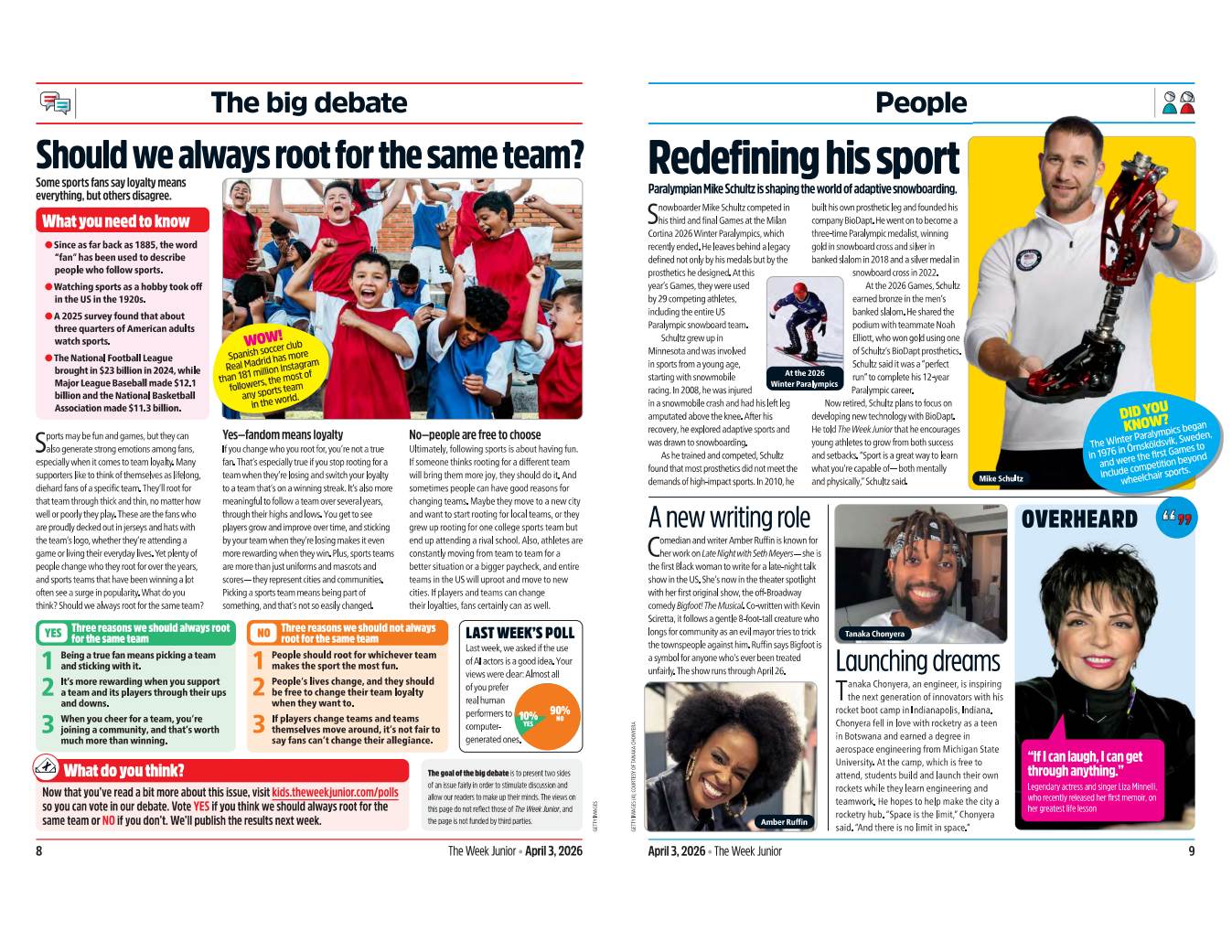
Profiled in The Week Junior
Read the text
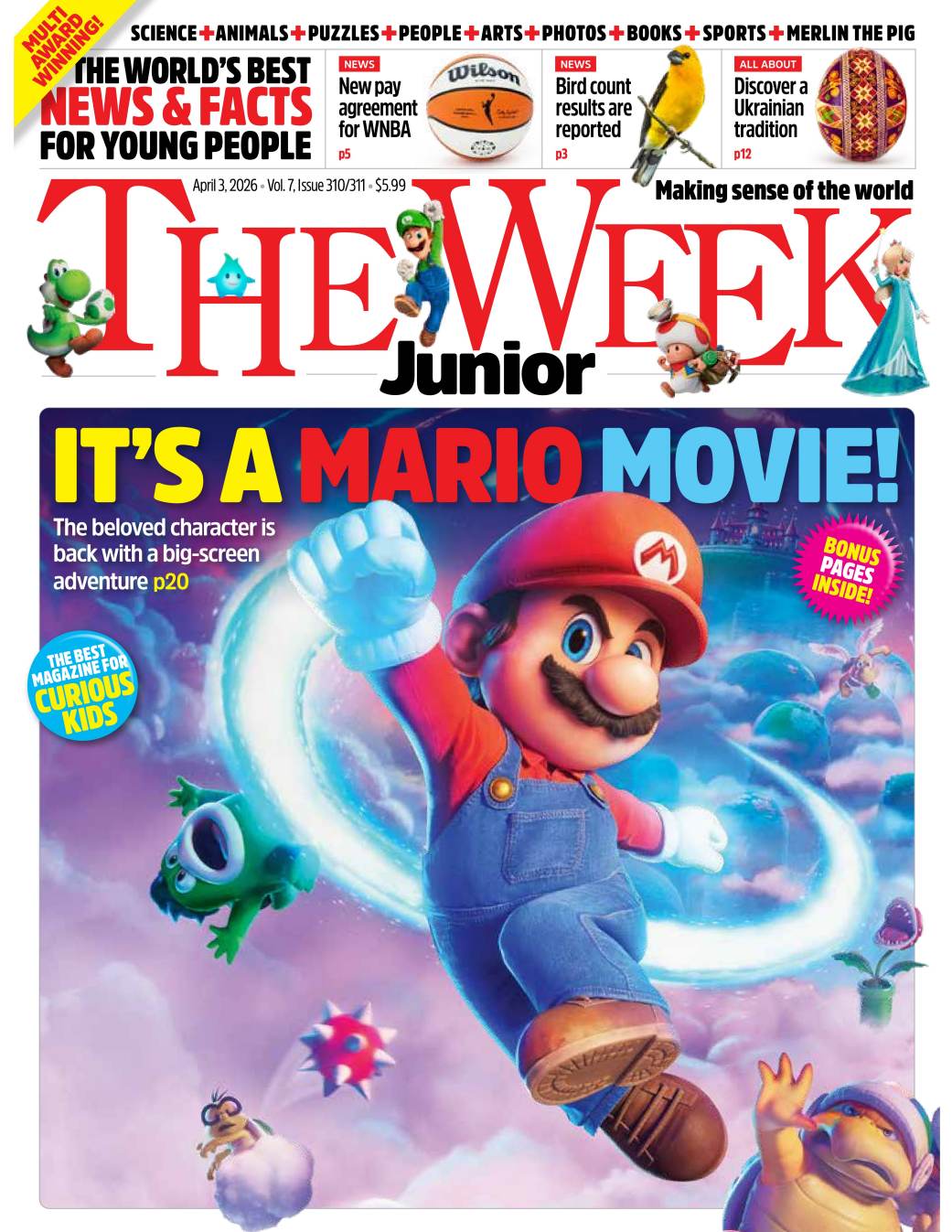
Tanaka Chonyera, an engineer, is inspiring the next generation of innovators with his rocket boot camp in Indianapolis, Indiana. Chonyera fell in love with rocketry as a teen in Botswana and earned a degree in aerospace engineering from Michigan State University. At the camp, which is free to attend, students build and launch their own rockets while they learn engineering and teamwork. He hopes to help make the city a rocketry hub. "Space is the limit," Chonyera said. "And there is no limit in space."
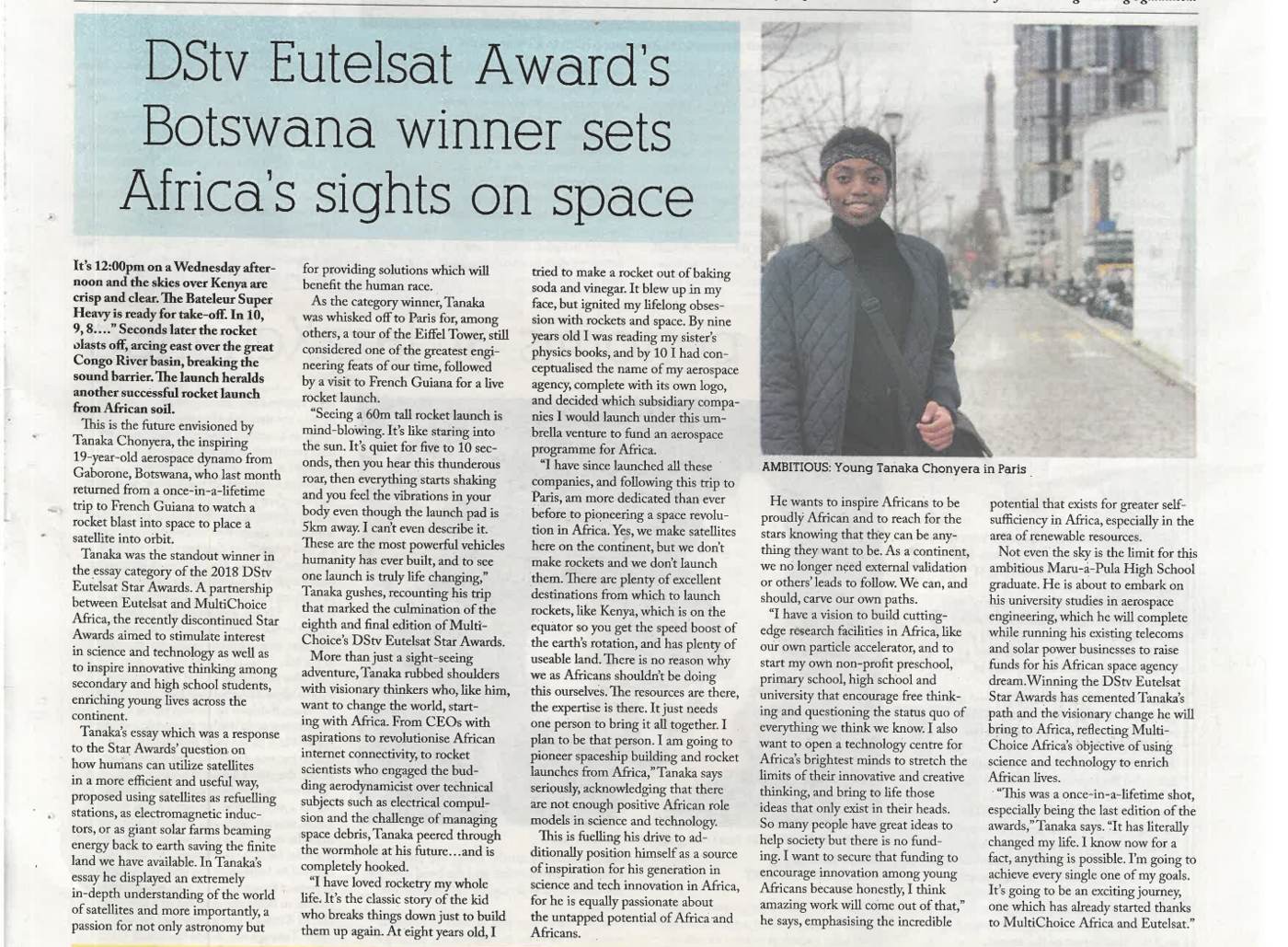
DStv Eutelsat Award's Botswana winner sets Africa's sights on space
Read the text
"It's 12:00pm on a Wednesday afternoon and the skies over Kenya are crisp and clear. The Bateleur Super Heavy is ready for take-off. In 10, 9, 8...." Seconds later the rocket blasts off, arcing east over the great Congo River basin, breaking the sound barrier. The launch heralds another successful rocket launch from African soil.
This is the future envisioned by Tanaka Chonyera, the inspiring 19-year-old aerospace dynamo from Gaborone, Botswana, who last month returned from a once-in-a-lifetime trip to French Guiana to watch a rocket blast into space to place a satellite into orbit.
Tanaka was the standout winner in the essay category of the 2018 DStv Eutelsat Star Awards. A partnership between Eutelsat and MultiChoice Africa, the recently discontinued Star Awards aimed to stimulate interest in science and technology as well as to inspire innovative thinking among secondary and high school students, enriching young lives across the continent.
Tanaka's essay which was a response to the Star Awards' question on how humans can utilize satellites in a more efficient and useful way, proposed using satellites as refuelling stations, as electromagnetic inductors, or as giant solar farms beaming energy back to earth saving the finite land we have available. In Tanaka's essay he displayed an extremely in-depth understanding of the world of satellites and more importantly, a passion for not only astronomy but for providing solutions which will benefit the human race.
As the category winner, Tanaka was whisked off to Paris for, among others, a tour of the Eiffel Tower, still considered one of the greatest engineering feats of our time, followed by a visit to French Guiana for a live rocket launch.
"Seeing a 60m tall rocket launch is mind-blowing. It's like staring into the sun. It's quiet for five to 10 seconds, then you hear this thunderous roar, then everything starts shaking and you feel the vibrations in your body even though the launch pad is 5km away. I can't even describe it. These are the most powerful vehicles humanity has ever built, and to see one launch is truly life changing," Tanaka gushes, recounting his trip that marked the culmination of the eighth and final edition of MultiChoice's DStv Eutelsat Star Awards.
More than just a sight-seeing adventure, Tanaka rubbed shoulders with visionary thinkers who, like him, want to change the world, starting with Africa. From CEOs with aspirations to revolutionise African internet connectivity, to rocket scientists who engaged the budding aerodynamicist over technical subjects such as electrical compulsion and the challenge of managing space debris, Tanaka peered through the wormhole at his future... and is completely hooked.
"I have loved rocketry my whole life. It's the classic story of the kid who breaks things down just to build them up again. At eight years old, I tried to make a rocket out of baking soda and vinegar. It blew up in my face, but ignited my lifelong obsession with rockets and space. By nine years old I was reading my sister's physics books, and by 10 I had conceptualised the name of my aerospace agency, complete with its own logo, and decided which subsidiary companies I would launch under this umbrella venture to fund an aerospace programme for Africa.
"I have since launched all these companies, and following this trip to Paris, am more dedicated than ever before to pioneering a space revolution in Africa. Yes, we make satellites here on the continent, but we don't make rockets and we don't launch them. There are plenty of excellent destinations from which to launch rockets, like Kenya, which is on the equator so you get the speed boost of the earth's rotation, and has plenty of useable land. There is no reason why we as Africans shouldn't be doing this ourselves. The resources are there, the expertise is there. It just needs one person to bring it all together. I plan to be that person. I am going to pioneer spaceship building and rocket launches from Africa," Tanaka says seriously, acknowledging that there are not enough positive African role models in science and technology.
This is fuelling his drive to additionally position himself as a source of inspiration for his generation in science and tech innovation in Africa, for he is equally passionate about the untapped potential of Africa and Africans.
He wants to inspire Africans to be proudly African and to reach for the stars knowing that they can be anything they want to be. As a continent, we no longer need external validation or others' leads to follow. We can, and should, carve our own paths.
"I have a vision to build cutting-edge research facilities in Africa, like our own particle accelerator, and to start my own non-profit preschool, primary school, high school and university that encourage free thinking and questioning the status quo of everything we think we know. I also want to open a technology centre for Africa's brightest minds to stretch the limits of their innovative and creative thinking, and bring to life those ideas that only exist in their heads. So many people have great ideas to help society but there is no funding. I want to secure that funding to encourage innovation among young Africans because honestly, I think amazing work will come out of that," he says, emphasising the incredible potential that exists for greater self-sufficiency in Africa, especially in the area of renewable resources.
Not even the sky is the limit for this ambitious Maru-a-Pula High School graduate. He is about to embark on his university studies in aerospace engineering, which he will complete while running his existing telecoms and solar power businesses to raise funds for his African space agency dream. Winning the DStv Eutelsat Star Awards has cemented Tanaka's path and the visionary change he will bring to Africa, reflecting MultiChoice Africa's objective of using science and technology to enrich African lives.
"This was a once-in-a-lifetime shot, especially being the last edition of the awards," Tanaka says. "It has literally changed my life. I know now for a fact, anything is possible. I'm going to achieve every single one of my goals. It's going to be an exciting journey, one which has already started thanks to MultiChoice Africa and Eutelsat."
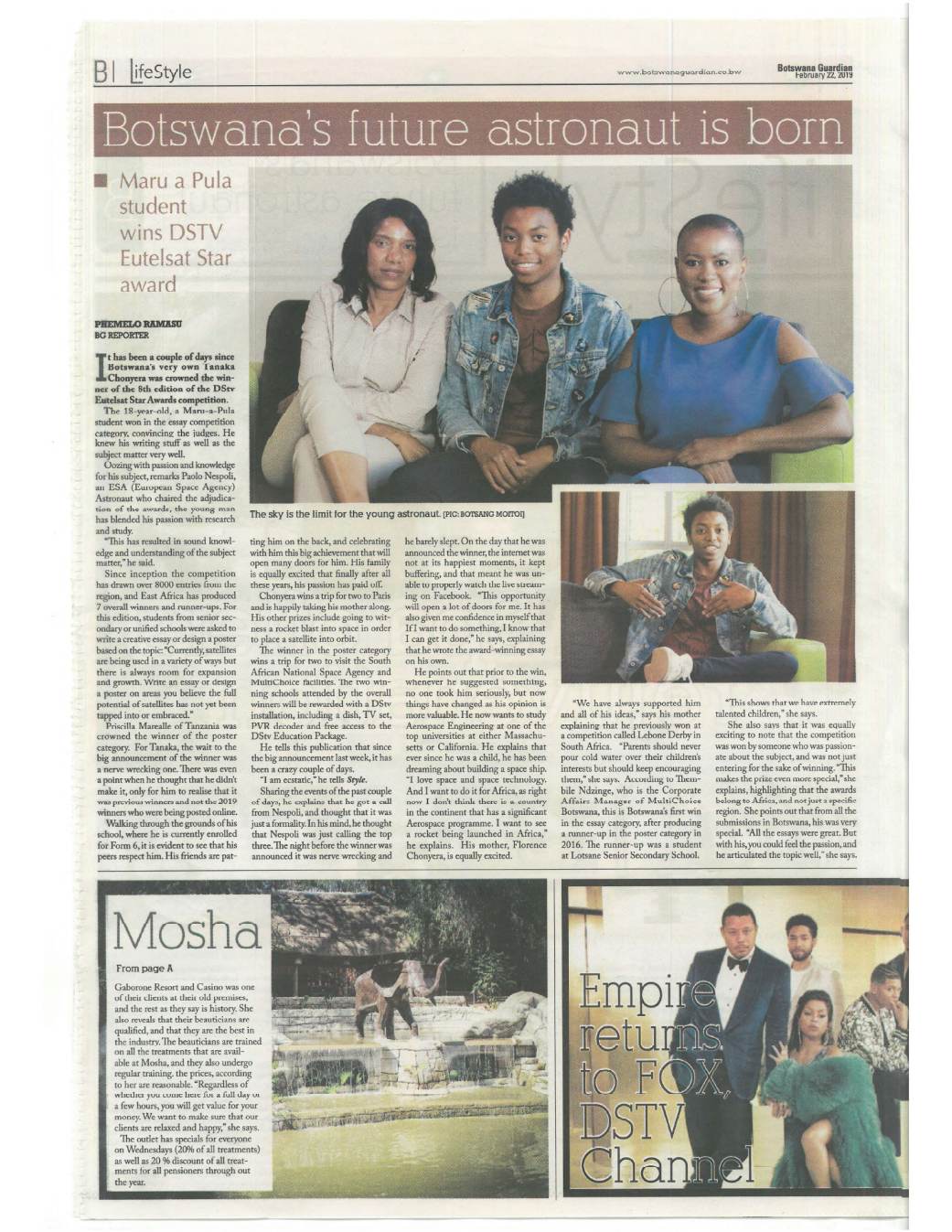
Botswana's Future Astronaut is Born
Read the text
It has been a couple of days since Botswana's very own Tanaka Chonyera was crowned the winner of the 8th edition of the DStv Eutelsat Star Awards competition.
The 18-year-old, a Maru-a-Pula student won in the essay competition category, convincing the judges. He knew his writing stuff as well as the subject matter very well.
Oozing with passion and knowledge for his subject, remarks Paolo Nespoli, an ESA (European Space Agency) Astronaut who chaired the adjudication of the awards, the young man has blended his passion with research and study.
"This has resulted in sound knowledge and understanding of the subject matter," he said.
Since inception the competition has drawn over 8000 entries from the region, and East Africa has produced 7 overall winners and runner-ups. For this edition, students from senior secondary or unified schools were asked to write a creative essay or design a poster based on the topic: "Currently, satellites are being used in a variety of ways but there is always room for expansion and growth. Write an essay or design a poster on areas you believe the full potential of satellites has not yet been tapped into or embraced."
Priscilla Marealle of Tanzania was crowned the winner of the poster category. For Tanaka, the wait to the big announcement of the winner was a nerve wrecking one. There was even a point when he thought that he didn't make it, only for him to realise that it was previous winners and not the 2019 winners who were being posted online.
Walking through the grounds of his school, where he is currently enrolled for Form 6, it is evident to see that his peers respect him. His friends are patting him on the back, and celebrating with him this big achievement that will open many doors for him. His family is equally excited that finally after all these years, his passion has paid off.
Chonyera wins a trip for two to Paris and is happily taking his mother along. His other prizes include going to witness a rocket blast into space in order to place a satellite into orbit.
The winner in the poster category wins a trip for two to visit the South African National Space Agency and MultiChoice facilities. The two winning schools attended by the overall winners will be rewarded with a DStv installation, including a dish, TV set, PVR decoder and free access to the DStv Education Package.
He tells this publication that since the big announcement last week, it has been a crazy couple of days.
"I am ecstatic," he tells Style.
Sharing the events of the past couple of days, he explains that he got a call from Nespoli, and thought that it was just a formality. In his mind, he thought that Nespoli was just calling the top three. The night before the winner was announced it was nerve wrecking and he barely slept. On the day that he was announced the winner, the internet was not at its happiest moments, it kept buffering, and that meant he was unable to properly watch the live streaming on Facebook. "This opportunity will open a lot of doors for me. It has also given me confidence in myself that if I want to do something, I know that I can get it done," he says, explaining that he wrote the award-winning essay on his own.
He points out that prior to the win, whenever he suggested something, no one took him seriously, but now things have changed as his opinion is more valuable. He now wants to study Aerospace Engineering at one of the top universities at either Massachusetts or California. He explains that ever since he was a child, he has been dreaming about building a space ship. "I love space and space technology. And I want to do it for Africa, as right now I don't think there is a country in the continent that has a significant Aerospace programme. I want to see a rocket being launched in Africa," he explains. His mother, Florence Chonyera, is equally excited.
"We have always supported him and all of his ideas," says his mother explaining that he previously won at a competition called Lebone Derby in South Africa. "Parents should never pour cold water over their children's interests but should keep encouraging them," she says. According to Thembile Ndzinge, who is the Corporate Affairs Manager of MultiChoice Botswana, this is Botswana's first win in the essay category, after producing a runner-up in the poster category in 2016. The runner-up was a student at Lotsane Senior Secondary School.
"This shows that we have extremely talented children," she says.
She also says that it was equally exciting to note that the competition was won by someone who was passionate about the subject, and was not just entering for the sake of winning. "This makes the prize even more special," she explains, highlighting that the awards belong to Africa, and not just a specific region. She points out that from all the submissions in Botswana, his was very special. "All the essays were great. But with his, you could feel the passion, and he articulated the topic well," she says.
High Voltage Divider Feature